What Should I Do If My Septic Tank Smells This Winter?

A smelly septic tank can be unpleasant at any time of the year, but the odor may become more noticeable during winter. Cold weather can affect your septic system, plumbing pipes, vents, and drain field, sometimes making it harder for wastewater and gases to move through the system correctly.
If you are wondering why your septic tank smells in winter, several issues could be responsible. A blocked vent, damaged pipe, partial blockage, frozen drain field, or an overdue septic tank pumping may all contribute to unpleasant smells.
Identifying the cause early can help prevent the problem from becoming more serious and protect the overall performance of your septic system.
Pipe Cracks or Damage
Your septic system relies on a network of pipes to transport wastewater from your home to the septic tank. Over time, these pipes can crack, deteriorate, or become damaged.
Damaged pipes may allow wastewater or sewer gases to escape, creating unpleasant odors around your property or inside your home. You may also notice other warning signs, such as slow drainage or recurring plumbing problems.
If the smell does not go away, a professional inspection can help determine whether damaged or leaking pipes are contributing to the problem.
A Partial Blockage
A partial blockage in your plumbing or septic pipes can interfere with the normal flow of wastewater. Grease, waste, and other materials can gradually build up inside the pipes and restrict water movement.
When wastewater cannot flow properly, gases and waste may accumulate, resulting in unpleasant sewage smells. Other signs can include slow drains, gurgling sounds, or toilets that are not flushing normally.
Addressing a blockage early can help prevent more serious drainage and septic problems.
A Blocked Vent Stack
Vent pipes play an important role in your plumbing and septic system. They allow sewer gases to escape safely outside while helping maintain proper air pressure for efficient drainage.
During winter, snow, ice, leaves, or other debris can block a vent stack. Animal nests can also create an obstruction. When the vent cannot release gases properly, unpleasant odors may travel back through the plumbing and into your home.
Checking the vent system can help determine whether a blockage is responsible for the smell.
Animal Nests
Cold weather can cause birds, squirrels, and other small animals to seek warm, sheltered locations. In some cases, they may build nests inside or around plumbing vent pipes.
A nest or other obstruction can restrict airflow and prevent sewer gases from escaping as they should. This can result in noticeable septic or sewage smells inside the house.
If you suspect that an animal nest is blocking a vent, professional inspection and removal can help resolve the problem safely.
Ice Buildup or a Frozen Drain Field
Freezing temperatures can interfere with the operation of a septic system. If a septic pipe or drain field becomes frozen, wastewater may have difficulty moving through the system.
This can cause slow drains, unpleasant odors, and potentially sewage backups if the problem becomes severe. Standing water or unusually wet areas around the drain field may also indicate a drainage issue.
If you believe your septic system has frozen, it is important to have the problem assessed promptly rather than allowing it to continue.
Your Septic Tank May Need to Be Pumped
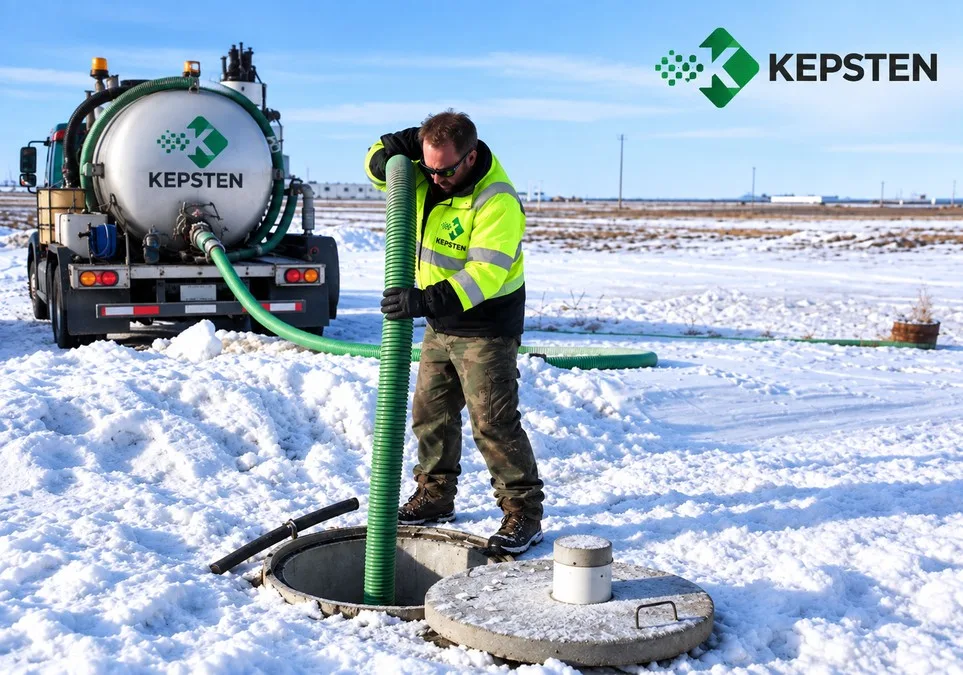
A properly functioning septic system should not normally produce a strong sewage smell around your property. If you notice persistent odors, your septic tank may be nearing its capacity and require pumping.
Solid waste naturally accumulates inside the tank over time. If too much sludge builds up, the tank may not operate as efficiently, which can affect the performance of the entire septic system.
Regular septic tank maintenance and pumping can help reduce the risk of odors, backups, and other problems. The appropriate pumping frequency depends on factors such as tank size, household size, and overall water usage.
What Should You Do About a Smelly Septic Tank?
If your septic tank smells during winter, look for other warning signs that may help identify the cause. These can include:
- Slow-draining sinks or showers
- Gurgling toilets or drains
- Sewage backups
- Standing water near the septic area
- Unusually wet areas around the drain field
- Persistent sewage odors inside or outside the home
Until the cause has been identified, try to avoid putting excessive amounts of water into the septic system. Spreading out laundry, showers, and other high-water-use activities can help reduce unnecessary strain on the system.
Most importantly, do not simply try to mask the smell with air fresheners or other temporary solutions. A persistent sewage odor can indicate an underlying septic problem that needs attention.
Let Kepsten Help With Your Septic System
A persistent septic tank smell during winter can be caused by several issues, including a blocked vent, damaged pipe, partial blockage, frozen drain field, or a tank that needs pumping.
Finding the cause early can help prevent more extensive damage and keep your septic system operating properly.
If you are dealing with a septic tank smell in winter, Kepsten can inspect your septic system and help identify the source of the problem. Our team can recommend the appropriate solution to help keep your septic system functioning efficiently throughout the colder months.